
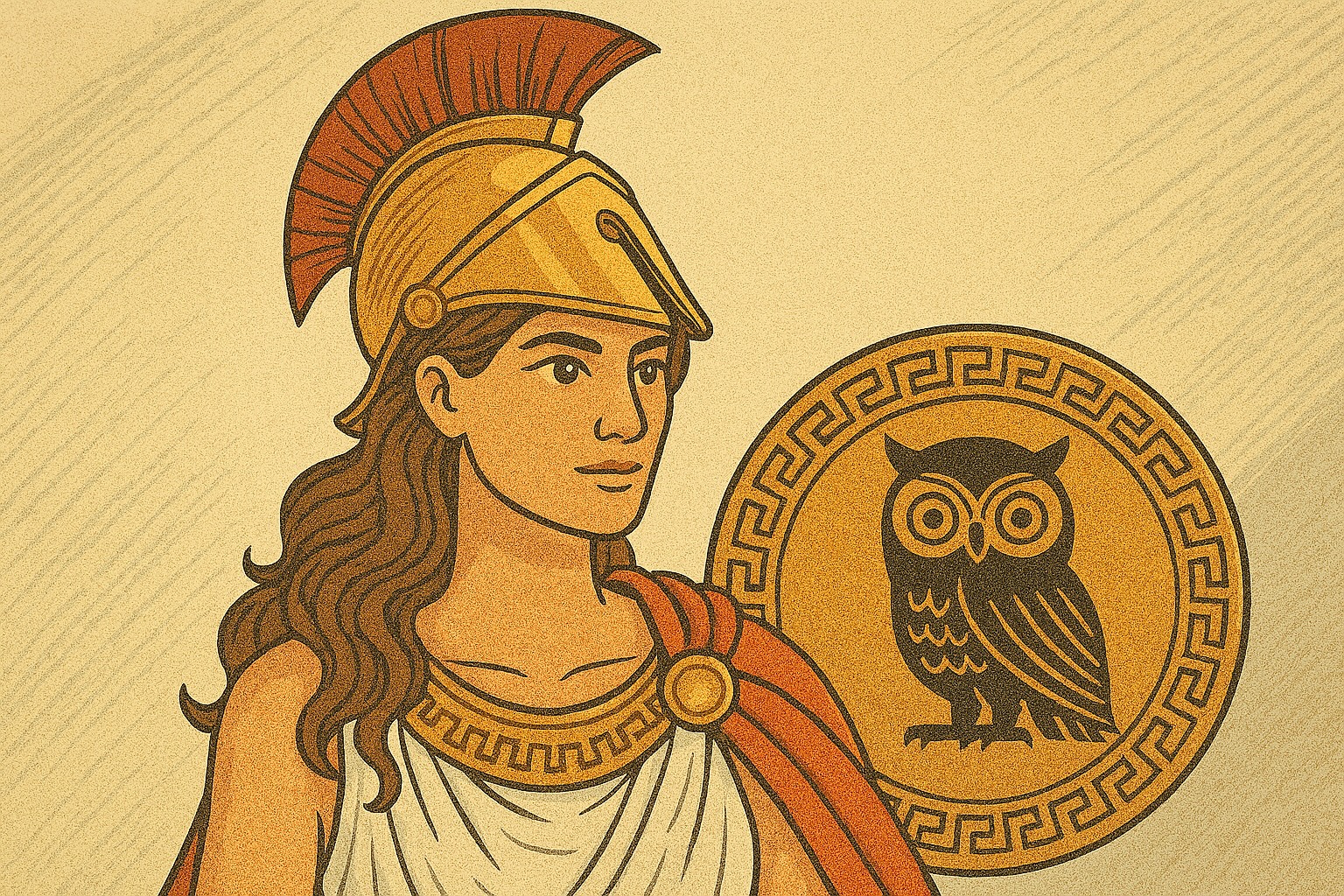
The origin story behind Escape Rooms and the human need to transform fear and confinement into triumph through ingenuity and collaboration.
Before there were doors with locks, there were chambers with secrets. Before there were keys made of brass and iron, there were riddles carved in starlight and shadow. In the time when gods walked between worlds like children stepping over puddles, two divine beings gazed upon the newest creation: mortals, fragile and fleeting, yet burning with an inexplicable fire called curiosity. Athena, keeper of wisdom’s flame, saw their potential for greatness through collaboration. But Loki, whose laughter echoed like breaking glass, saw only opportunity for mischief. “Watch,” whispered Athena as she wove the first puzzle-chamber from moonbeams and marble, “how they will learn to trust one another, to combine their different gifts, to transform fear into understanding.” Loki smiled, his fingers already dancing with corruption. “Indeed,” he purred. “Let us see what becomes of your precious lessons when touched by a little… chaos.” What began as divine gift would become humanity’s greatest trial—and eventually, its most beloved pastime. But first, the chambers had to travel through millennia of darkness, waiting for someone wise enough to remember their true purpose.
The Ancient Binding
The corruption began with whispered words—Loki’s silver tongue weaving doubt into the sacred geometry of Athena’s creation. Where once the chamber had pulsed with gentle light to guide seekers, now shadows lengthened and deepened. The symbols that had spelled wisdom twisted into warnings of doom. The mechanisms that once rewarded collaboration now punished hesitation with grinding stone and hidden blades. From this first tainted chamber, the curse spread like ripples across the mortal realm. Egyptian architects, guided by dreams they thought divine, carved deadly puzzles into pharaohs’ tombs—chambers where grave robbers would meet their end in crushing walls and poison darts. Medieval lords, seized by the same dark inspiration, commissioned dungeons with elaborate mechanisms designed to break the spirit before the body. Each iteration grew more cunning, more cruel. The original gift of cooperative wisdom became a legacy of fear and isolation. What Athena had meant as humanity’s greatest lesson—that minds working together could overcome any challenge—became their greatest terror. Yet deep within each corrupted chamber, like a heartbeat beneath scar tissue, the original divine pattern waited, patient and unchanged.
The Scholar’s Discovery
Dr. Elena Vasquez had spent thirty years in dusty archives and forgotten ruins, her obsession with ancient architectural patterns earning her colleagues’ whispers of eccentricity. But in the lamplight of her Cambridge study, surrounded by sketches from Karnak tombs and medieval castle blueprints, she finally saw it—the golden thread connecting them all. Each chamber, whether Egyptian death trap or Norman torture room, bore the same underlying geometry. The same sequence of mathematical relationships. The same careful progression from simple to complex. “Not traps,” she whispered, her pencil trembling as she traced the pattern. “Lessons.” The revelation struck like lightning: these weren’t instruments of death, but corrupted classrooms. Someone—or something—had designed them to teach. To forge bonds between strangers through shared struggle and triumph. Within months, Elena had constructed the first prototype in her university’s basement. No deadly mechanisms, no ancient curses—just puzzles that whispered of collaboration, of minds joining together to unlock what seemed impossible alone. As her first test subjects emerged laughing and embracing, she knew she had reclaimed something sacred.
The Modern Awakening
Dr. Marcus Chen had always been captivated by his mentor’s basement laboratory, but after Elena’s passing, he felt the weight of her legacy settling upon his shoulders like a sacred mantle. The notebooks she left behind spoke of humanity’s forgotten birthright—the divine gift of collaborative wisdom that Loki had buried beneath centuries of fear. With reverent hands, Marcus began crafting the first commercial escape room in an abandoned warehouse. He called it “The Athena Chamber,” designing puzzles that could only be solved through genuine cooperation. When the first group emerged, breathless and triumphant, their faces glowing with the same wonder Elena had described from ancient texts, Marcus knew he had awakened something profound. Word spread like wildfire. Within months, escape rooms bloomed across continents—Tokyo to London, São Paulo to Sydney. Each chamber became a temple where strangers transformed into allies, where individual cleverness merged into collective brilliance. The trickster’s corruption was finally lifting, dissolving under the laughter of friends solving riddles together. Athena’s original gift had returned to the world, disguised as entertainment but carrying its ancient power: the recognition that humanity’s greatest strength lay not in solitary cunning, but in minds united in common purpose.
The Revelation
As the thousandth escape room opened its doors that autumn evening, something extraordinary occurred. In chambers from Tokyo to Toronto, players placing their final keys felt a subtle warmth, a whisper of ancient approval. Dr. Chen, now elderly, stood in the original Athena Chamber and sensed it too—the presence that had always lingered just beyond perception. For in that moment, as millions of strangers became friends through shared puzzles, as countless minds joined together in pursuit of solutions, Athena’s original vision was finally, fully realized. The corruption that had twisted her gift into instruments of fear had been broken not by divine intervention, but by the very human qualities she had always sought to nurture: curiosity, cooperation, and the irrepressible joy of discovery. Loki’s ancient mischief had been undone by something he could never understand—the simple pleasure people found in thinking together, in celebrating each other’s insights, in transforming every locked door into an invitation rather than a barrier. What began as divine rivalry had become humanity’s gift to itself: the knowledge that no puzzle is too complex when minds unite, and every escape is really a journey toward connection.